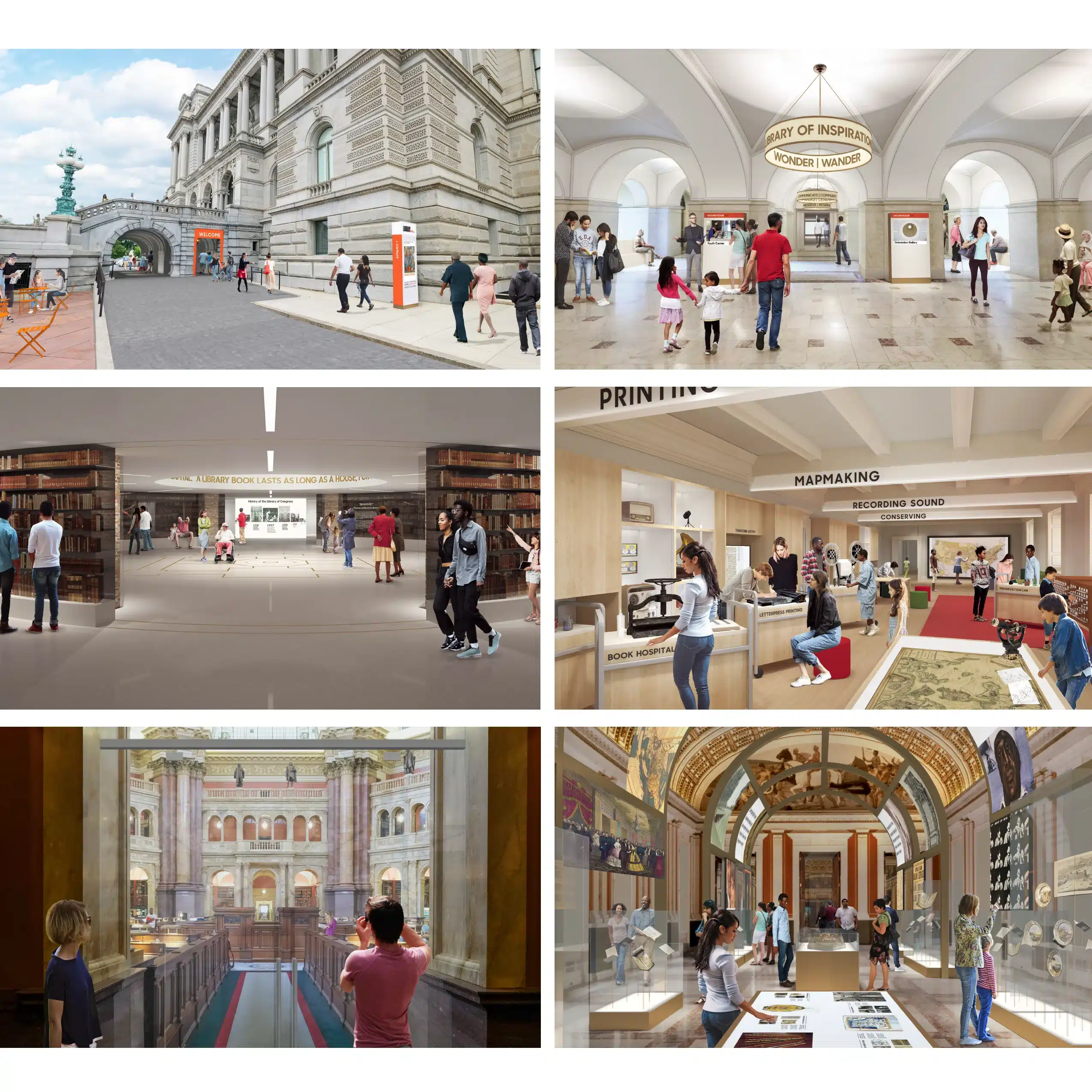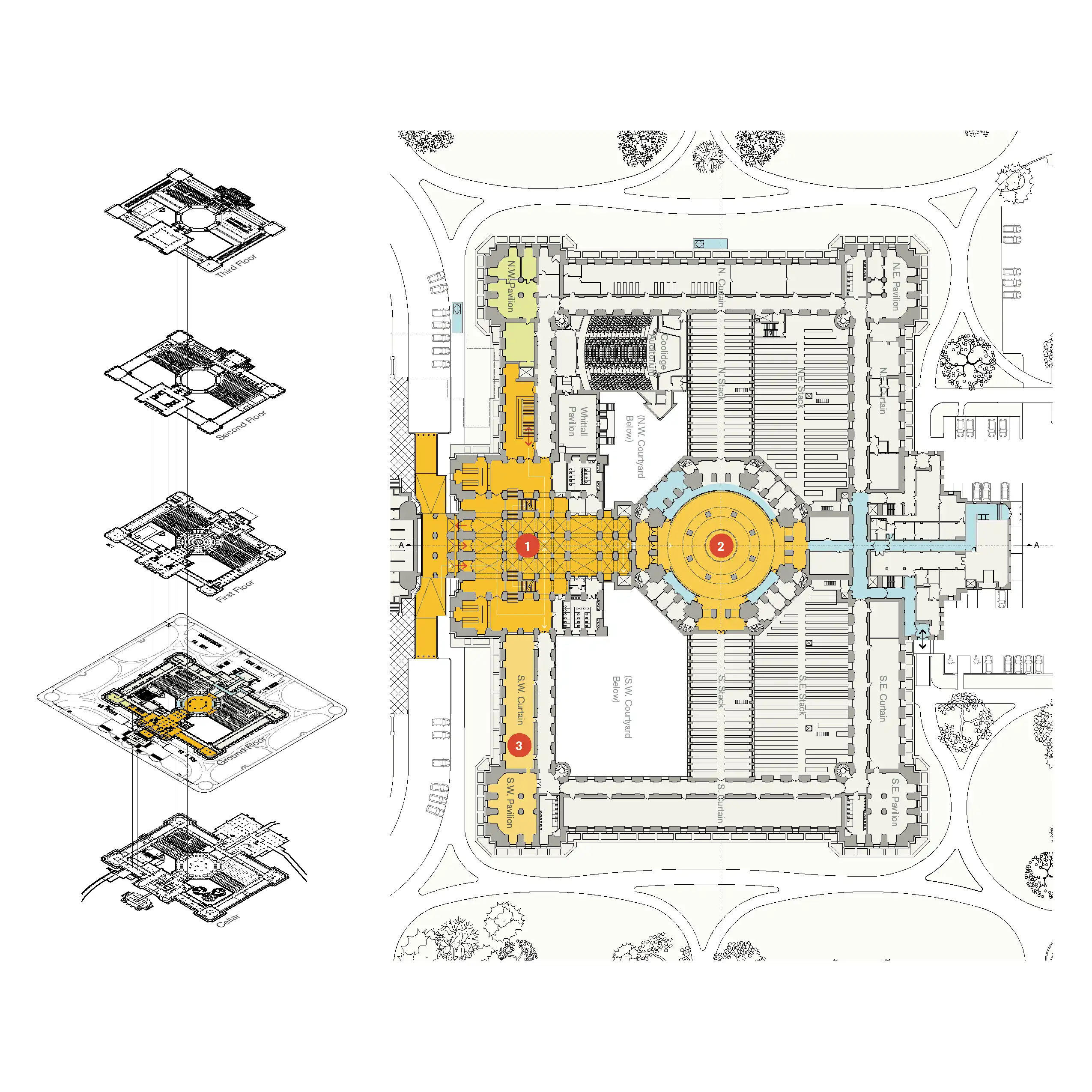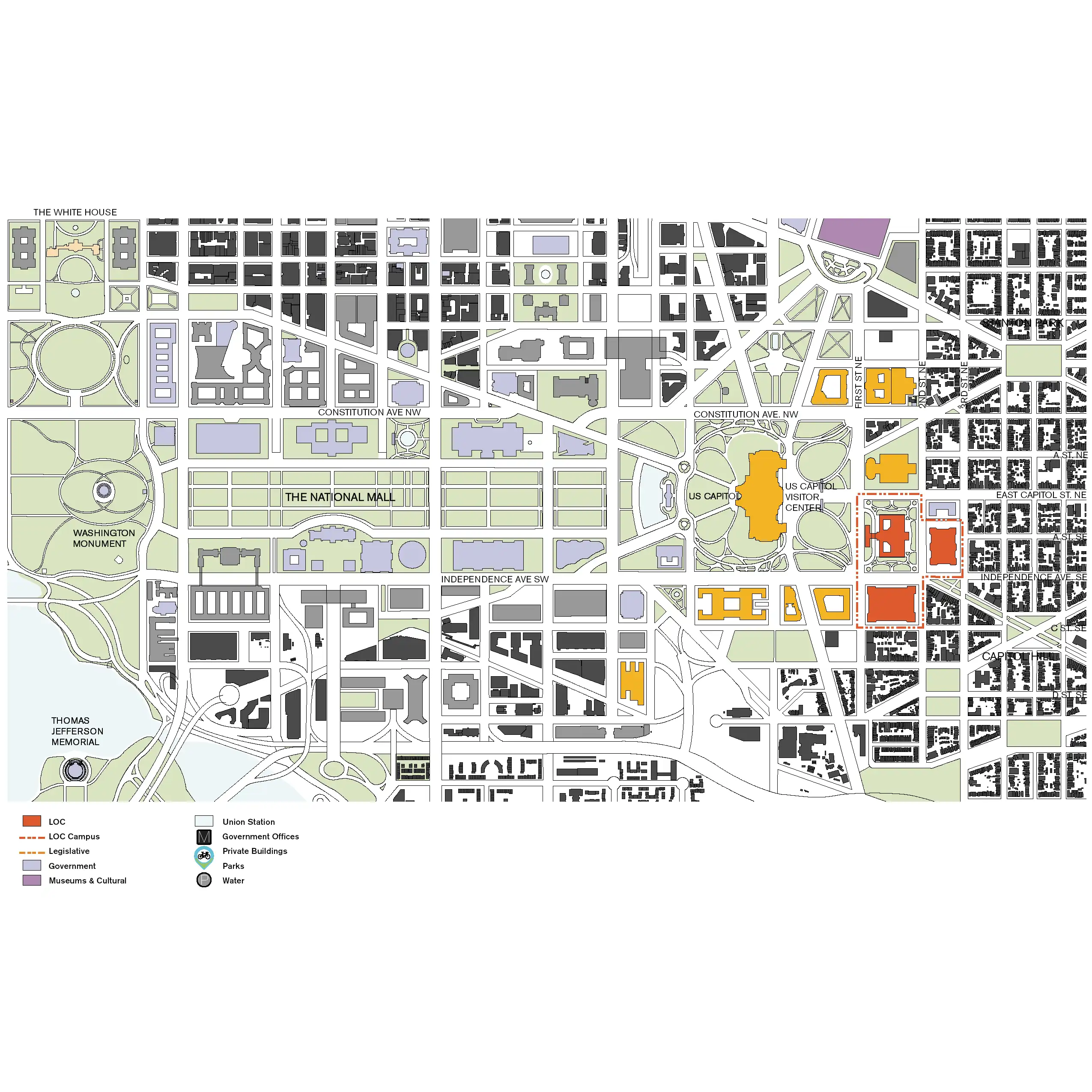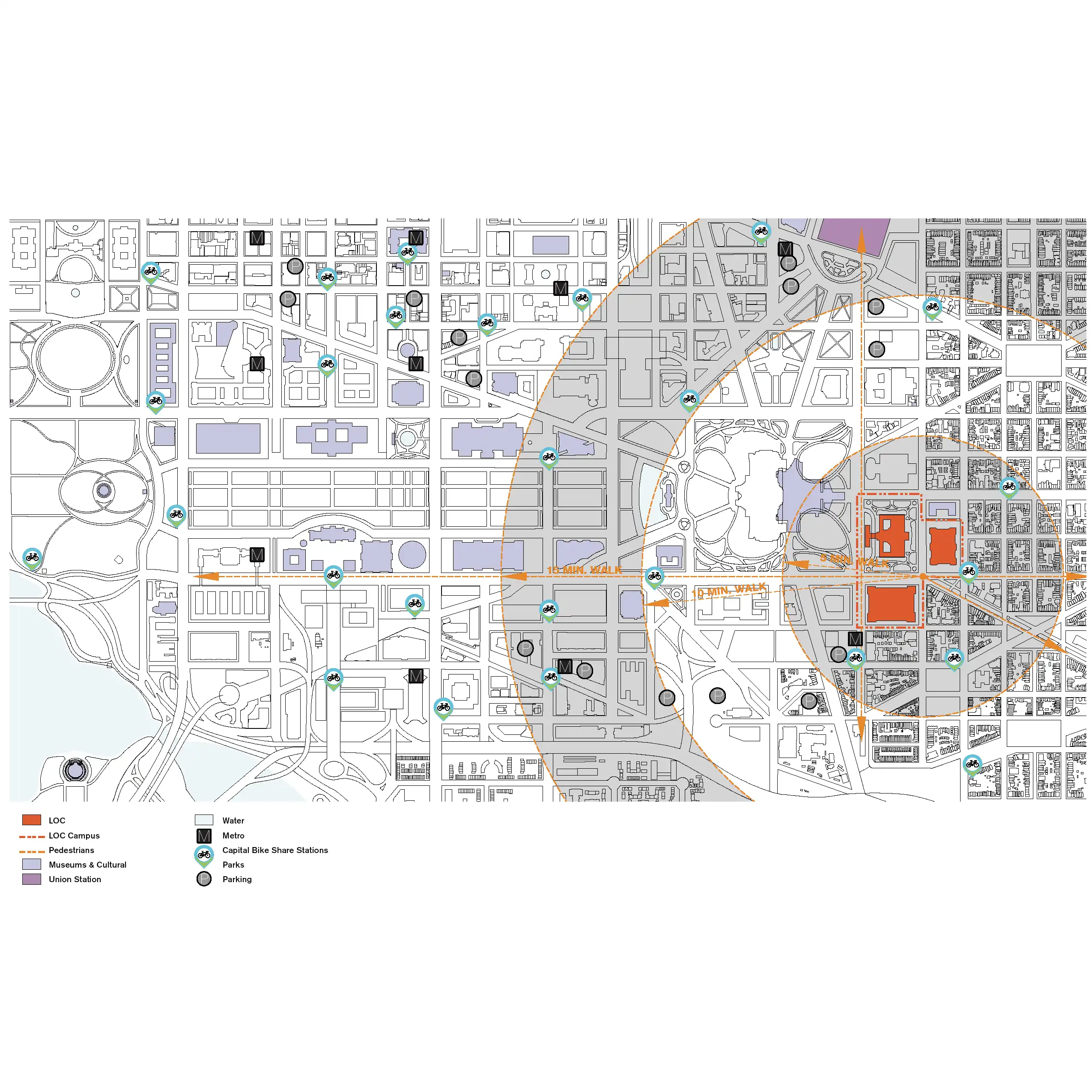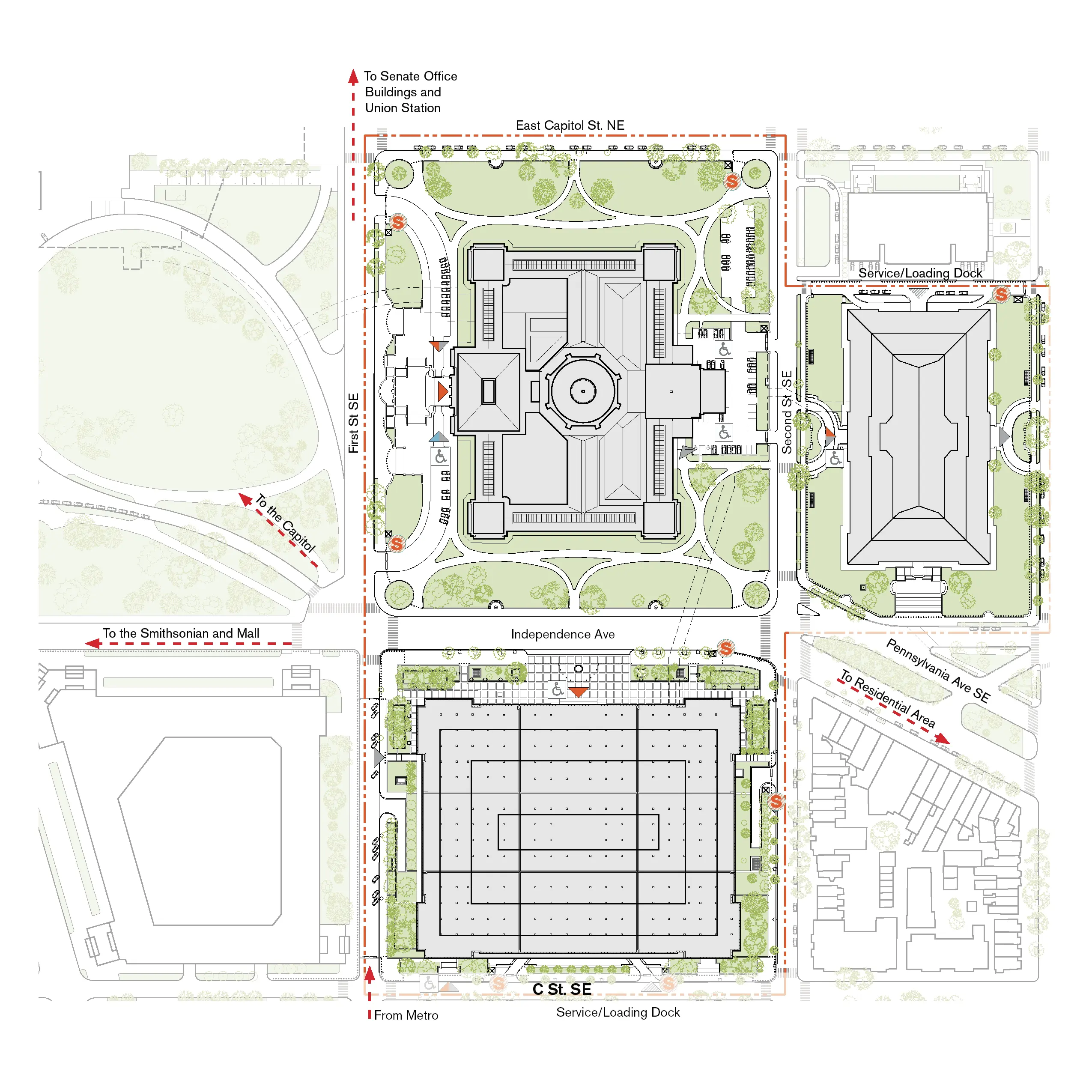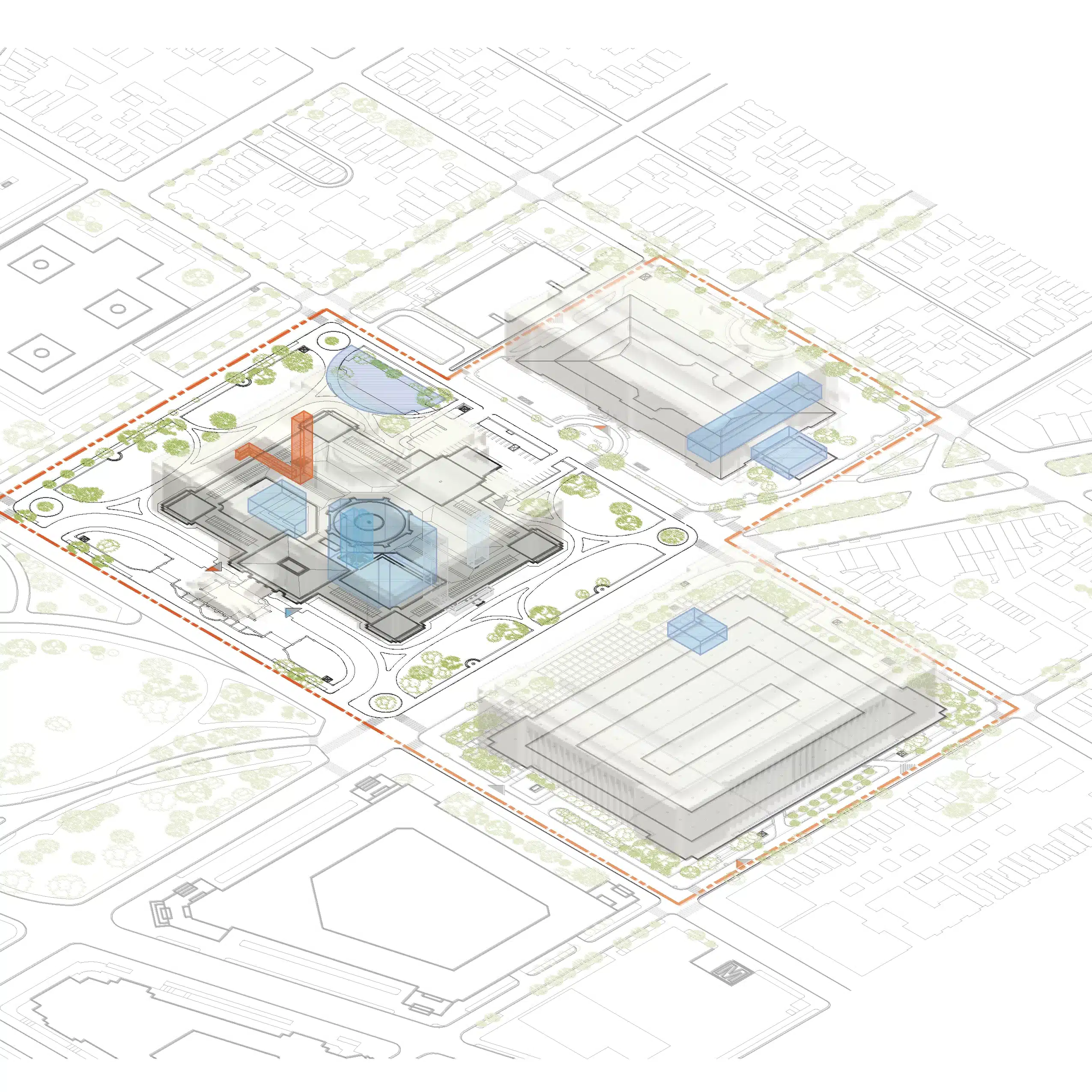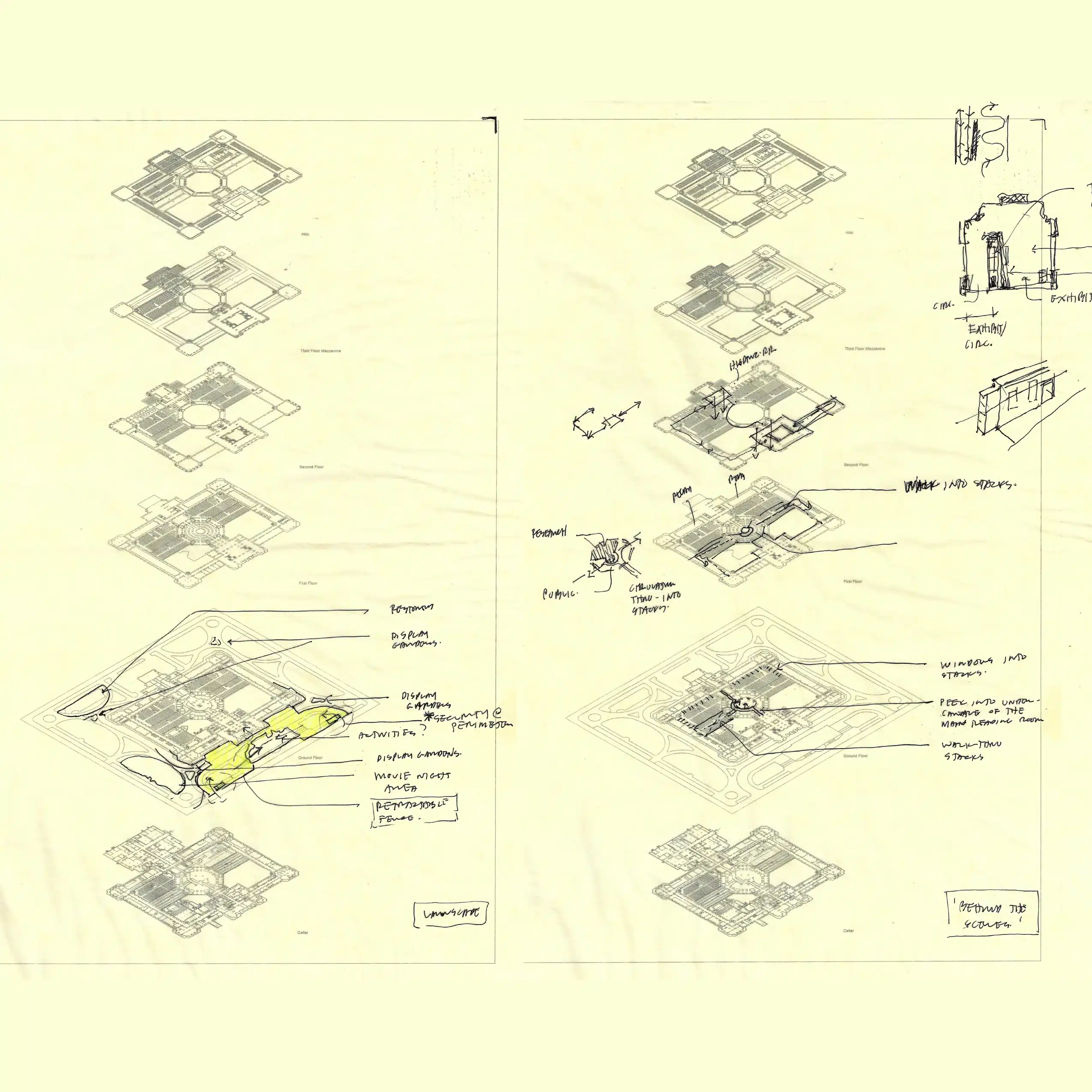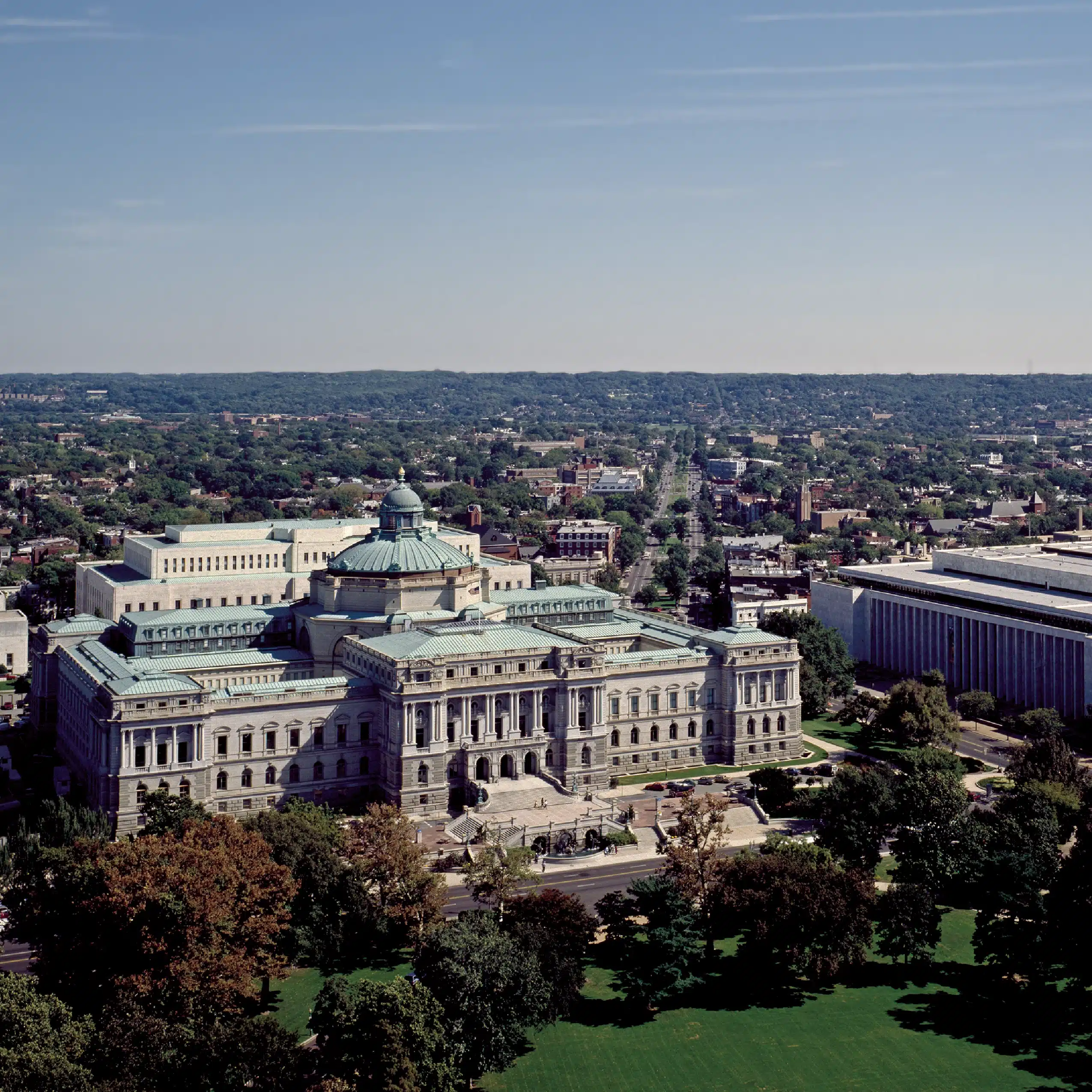
With Pure + Applied and the design team, Bergen Street Studio collaborated with the Library of Congress to develop a Visitor Experience Master Plan focused on improving accessibility, navigation, and engagement across the institution’s historic Capitol Hill campus.
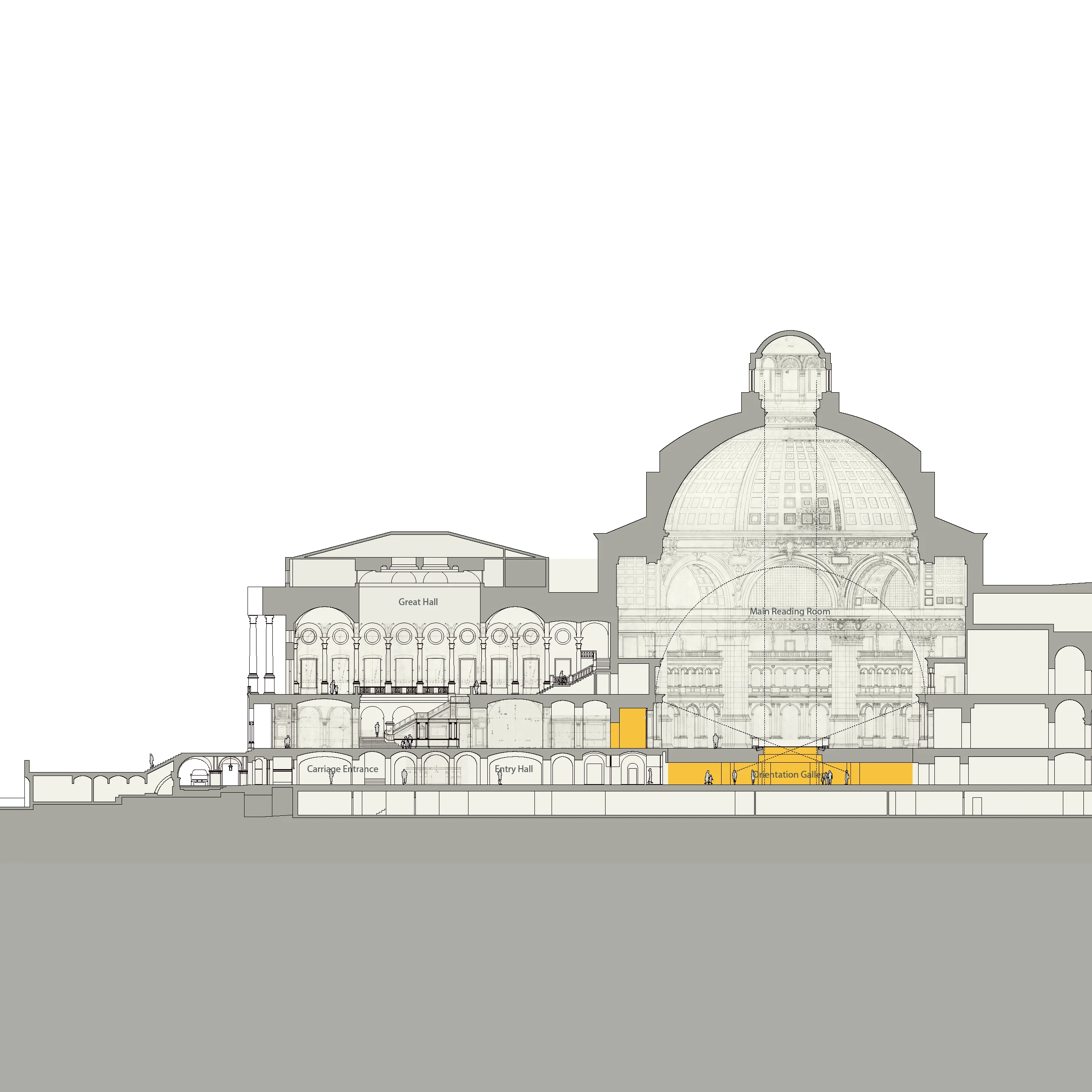
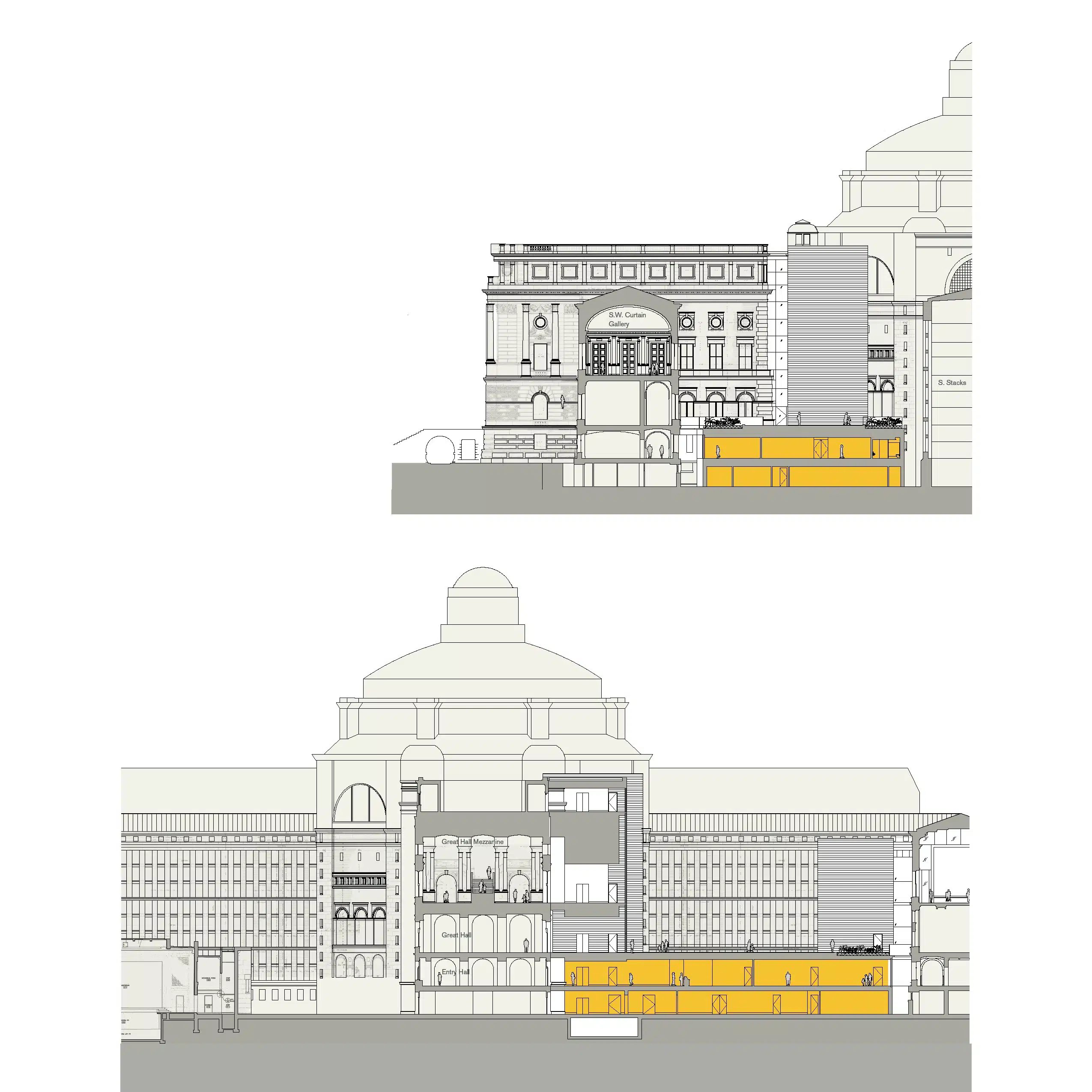
The study encompassed the Thomas Jefferson Building, John Adams Building, and James Madison Memorial Building, each presenting distinct architectural, operational, and visitor-experience challenges. Our research included a comprehensive review of architectural drawings, historical reports, and campus-wide planning documents, together with an analysis of circulation, wayfinding, public spaces, visitor amenities, and existing facilities.
The planning process extended beyond documentation and analysis. We worked closely with Library of Congress staff and the Architect of the Capitol to understand how visitors, researchers, and staff use and move through the campus. These operational insights helped inform opportunities to create greater spatial clarity, improve visitor flow, and enhance the overall experience while respecting the architectural and historic significance of the Library of Congress.
This planning will inform conceptual design strategies, wayfinding improvements, and lay the groundwork for future long-term design and master planning initiatives, supporting a more intuitive and accessible environment at one of the nation’s most important cultural institutions.